Australia’s First Intelligent Compaction Workshop a Success

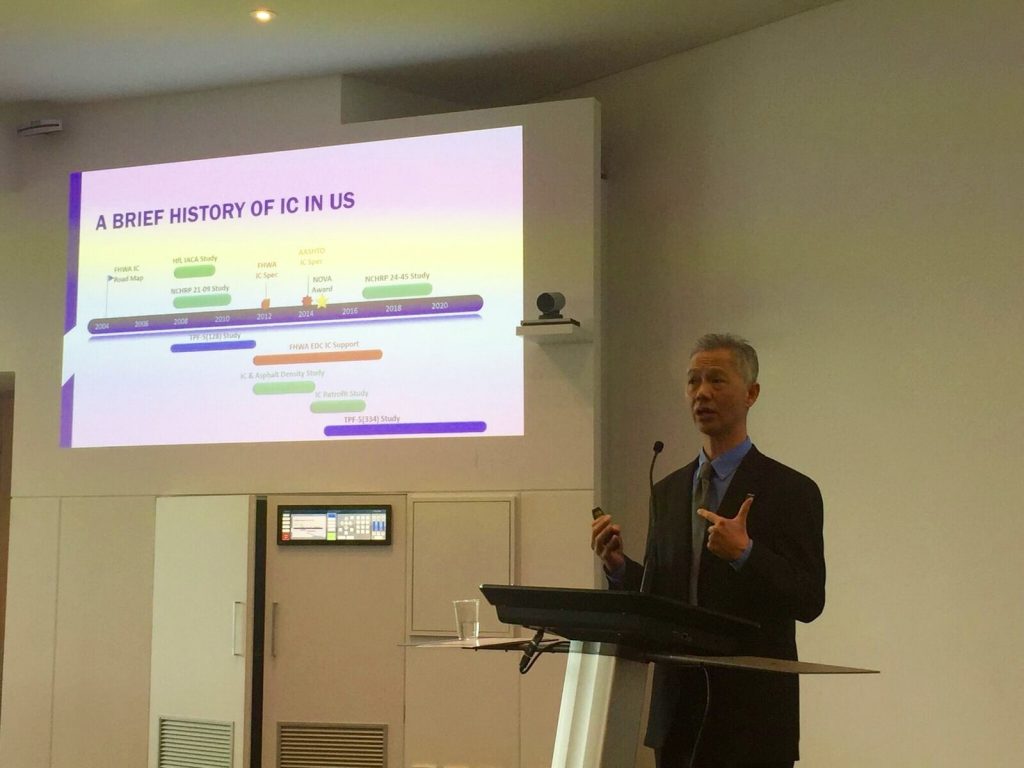
Dr. George Chang presents an intelligent compaction intro at Australia's first intelligent compaction workshop.

Pavement engineering firm The Transtec Group led Australia’s first Intelligent Compaction (IC) workshop in Brisbane to share what agencies in the US have learned and experienced in the past 15 years of IC implementation.

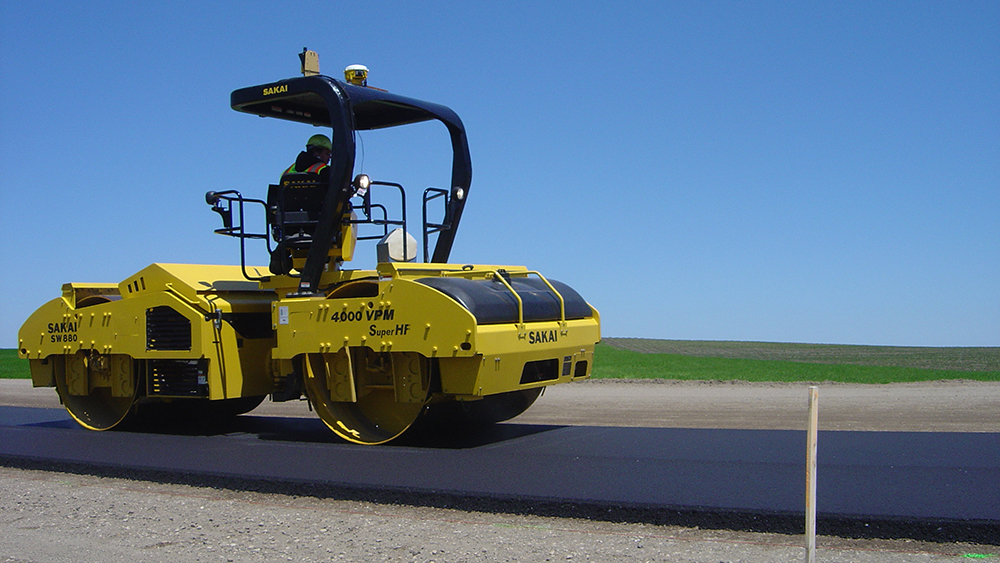
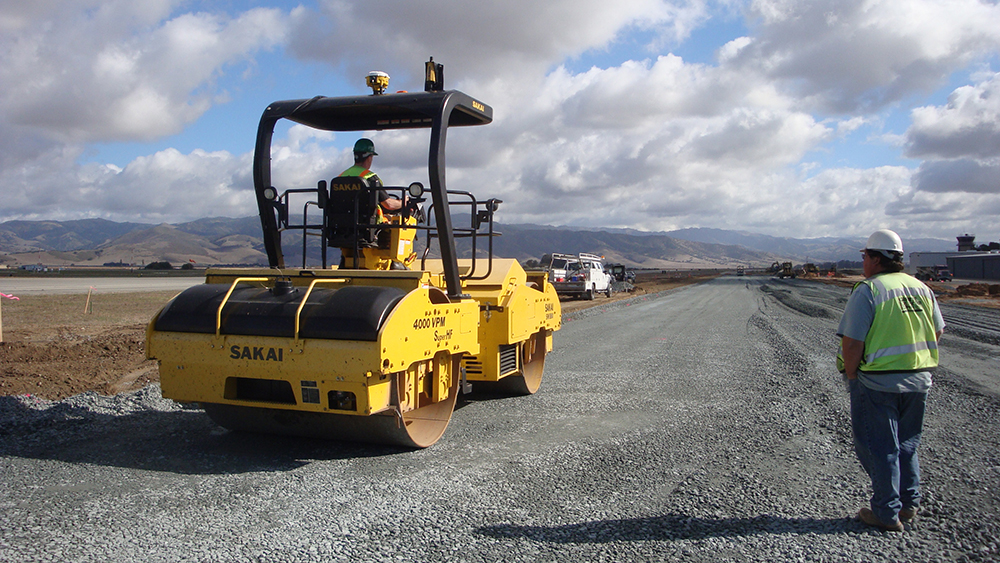
IC is a roller-based technology that measures roller passes, compaction temperatures, and stiffness of compacted materials in real-time. It allows for the real-time detection of paving and compaction issues so paving crews can adjust the operation to improve the final pavement quality. Using IC improves construction quality control (QC) and efficiency to make pavements last longer and to reduce maintenance costs.

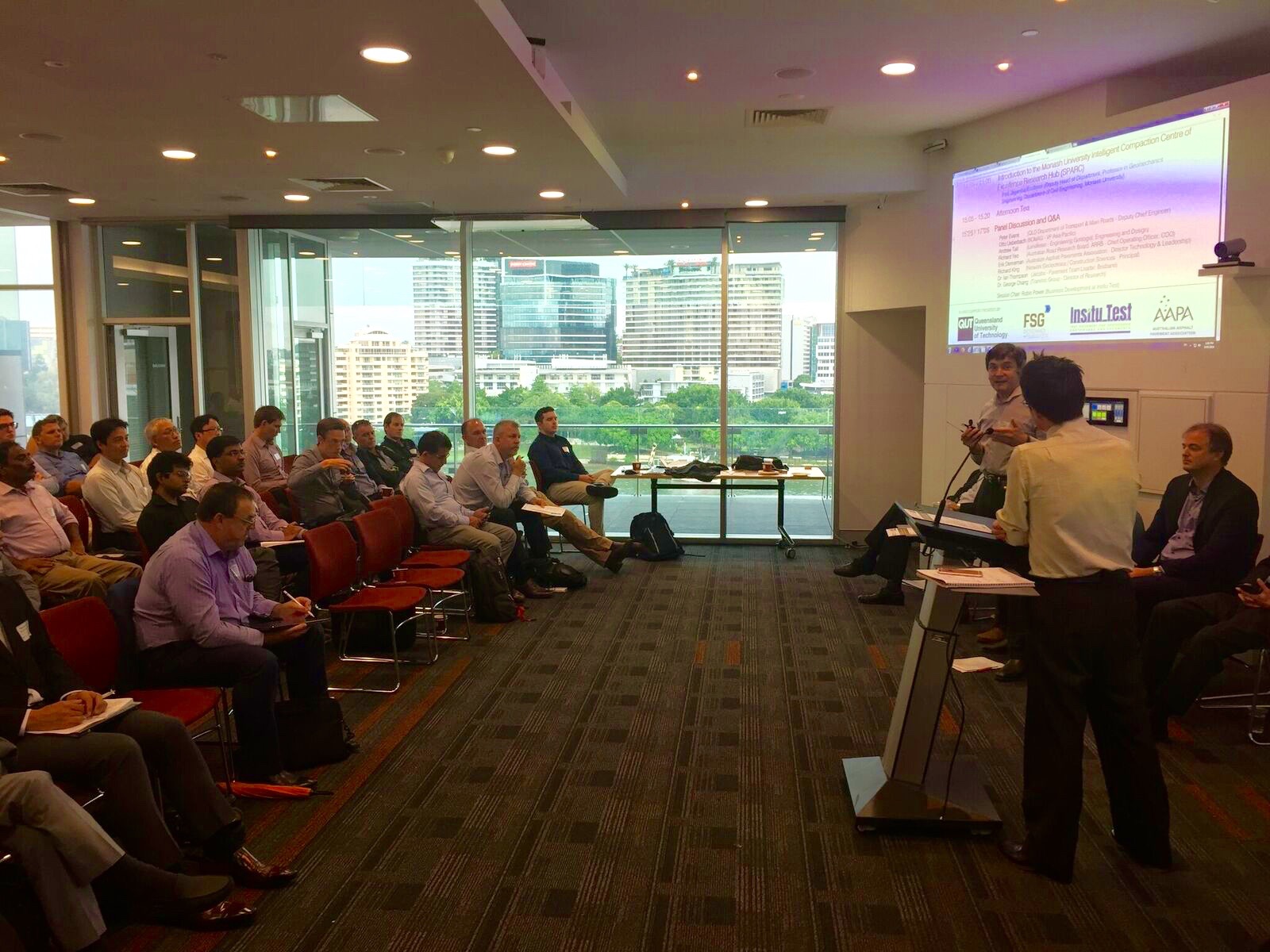
The workshop, held on May 8, brought together Australian agencies, research groups, contractors, and vendors. It was organized by the Australian Geomechanics Society and co-sponsored by Monash University, the Australian Road Research Board (ARRB), Queensland University of Technology (QUT), FSG Geotechnics & Foundations, Insitu Test, and the Australian Asphalt Pavement Association (AAPA). Topics covered included IC basics/theory/models, how IC can be implemented, lessons-learned from implementation in the US and China, a demonstration of Veta software, IC case studies from Australia, and a vibrant panel discussion.

Intelligent compaction panel discussion

Those in the panel discussion included an executive of AAPA, which plans to support road agency and industry members in the introduction of IC and address any barriers.

“The Australian Asphalt Pavement Association and its members are interested in IC as part of our industry’s commitment to continual improvement,” said Dr. Erik Denneman, AAPA Director of Technology and Leadership. “We expect that IC will lead to increased uniformity of compaction.”

Peter Evans, the Deputy Chief Engineer with the Department of Transport and Main Roads (TMR) of Queensland, was also member of the panel discussion.

“It was interesting to see how well-developed IC technology is now and its increasing use in the US,” said Evans. “I look forward to working with the industry to introduce this into TMR.”

Dr. George Chang, Director of Research at The Transtec Group, led the workshop.

“The main takeaway from Transtec’s IC workshops is for agencies, groups, and companies to fully understand IC’s benefits and see how it can be a great quality control tool,” said Dr. Chang.

The Transtec Group recently provided complete consulting support to the Missouri Department of Transportation (MoDOT) during a year-long IC and infrared scanning (IR) demonstration project. Because of the success of the project, MoDOT has committed to fully implementing IC by 2021.

Other agencies or companies interested in IC or IR—also known as paver-mounted thermal profiling (PMTP)—can get started with the Intelligent Construction Technical Support Center. Services offered include online HelpDesk support for Veta software, training workshops, field project support, and complete support packages.

Read more

Veta 5.1.16 Released

Veta Software Update

This update addresses problems that will prevent downloading data directly from MOBA.

Download Veta 5.1

Import

  • Fixed: Downloading MOBA data could fail if a file had no data.
  • Change: Server addresses for downloading MOBA have been updated. It is not known how long previous 5.x versions will be able to download MOBA data.
Read more

The Transtec Group Provides Complete Consulting Services to Year-Long MoDOT IC, IR Project

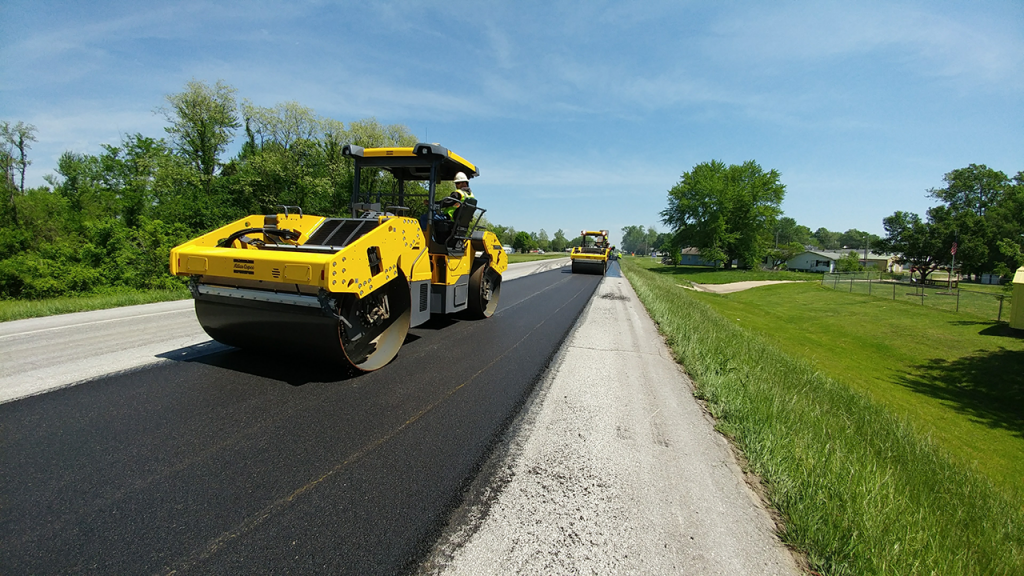
Workers operate IC rollers on Route 52 in Morgan County, Missouri
Read more

Veta 5.1 Released

Veta Software Update

We are pleased to release Veta 5.1. We have included support for MOBA intelligent compaction files, added a new type of location filter, added charts that can be used for quality control, and created a report to list all filter settings.

Because this version only contains new features and fixes, it should be used to replace 5.0. Due to limited resources, we are currently planning to support only 5.1+, not 5.0.

Download Veta 5.1

Installation Notes

  • Microsoft .NET 4.6.2 is required.
  • Windows 7 SP 1 is the minimum supported operating system.
  • Veta 5.1 can be installed on the same machine as previous versions.
  • Veta 5.1 can open projects created in previous versions, but not vice-versa.

Import

  • New: Added support for MOBA intelligent compaction files.
  • Fixed: Adding a data file that did not contain any new data could cause a crash when viewing “Imported file name” for an operation filter.

Filters

  • New: Added a new location filter that be created using only one line from an alignment and offsets. For example, 12 to 24 feet from the centerline. This allows the use of alignments that do not have all lanes defined.

Sublots

  • Fixed: Changing most of the values did not clear the sublots.

Analysis

  • New: Added quality control charts using data from sublots. This is the first pass at creating reports that can help for quality control.

Reports

  • New: Created a new report that lists all filter settings for data lot filter groups. This provides an easier way to check for filter groups that may not have the correct settings.
  • Change: The screen now attempts to only show the options that are applicable and will disable the “Create” button if the selected options will not produce a report. Note there are still some rare scenarios that will not create a report, but these should only be scenarios that are not practical.
Read more

Veta 5.0.51 Released

Veta Software Update

This version fixes issues with importing data.

Download Veta 5.0

Import

  • Fixed: UTM zone was sometimes detected incorrectly.
  • Fixed: Veta downloading of Topcon data. This issue was found during testing and has not been reported in practice. This could happen in two scenarios:
    1. Downloads of Topcon data are occurring in multiple copies of Veta and the date ranges overlap. This can result is the wrong data being used for a project, but should be apparent upon review.
    2. Topcon data is downloaded for a site. Without closing the download window, the site is changed and data is downloaded again. Veta will not download the data for the new site.
  • Change: EPSG codes for all OCRS zones are now recognized. Codes for the new zones did not exist until recently.
Read more

Veta 5 Now Available: Enhance IC and PMTP Data Analysis

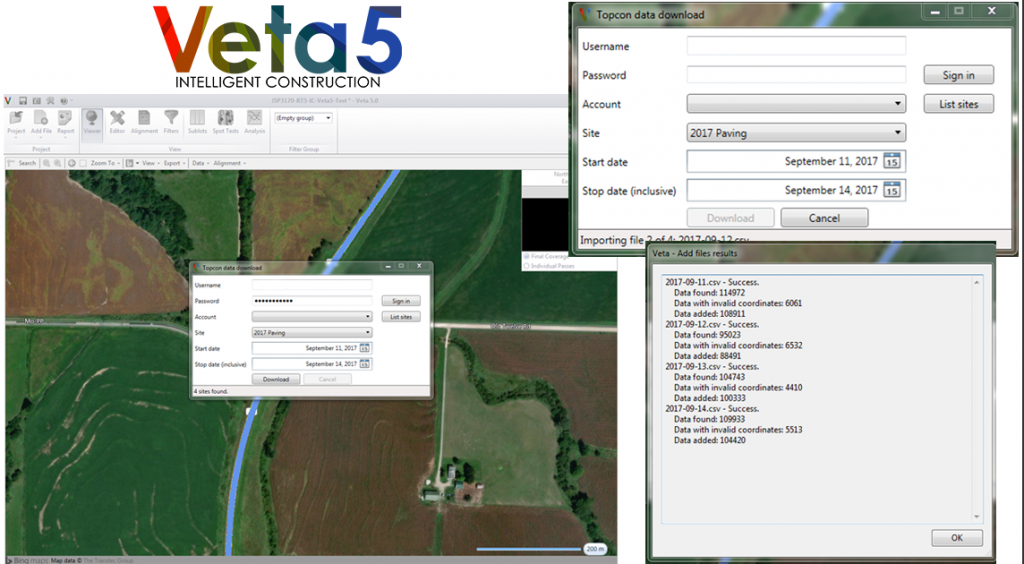
Veta 5 includes direct data download from the Cloud.

Veta is a free map-based software tool for contractors and highway officials to standardize, display, analyze, and report data collected by intelligent compaction (IC) and paver‐mounted thermal profiling (PMTP) technologies during construction. Veta can import data from various IC machines and PMTP scanners to perform editing, filtering, spot test correlation, and statistical analysis as a post-processing tool.

Veta 5 is the newest, powerful upgrade to the free Veta software.

[button link=”www.intelligentconstruction.com/veta/”]Download Veta 5 for Free[/button]

New features include:

  • Better, faster, and more efficient data imports, including direct downloads from the cloud and a redesigned data import wizard to better handle data from various machines.
  • Redesigned and more powerful filters to handle any type of data extraction.
  • A filter group generator that can produce filter groups based on AASHTO PP81 naming conventions.
  • New features for more flexible data analysis options.
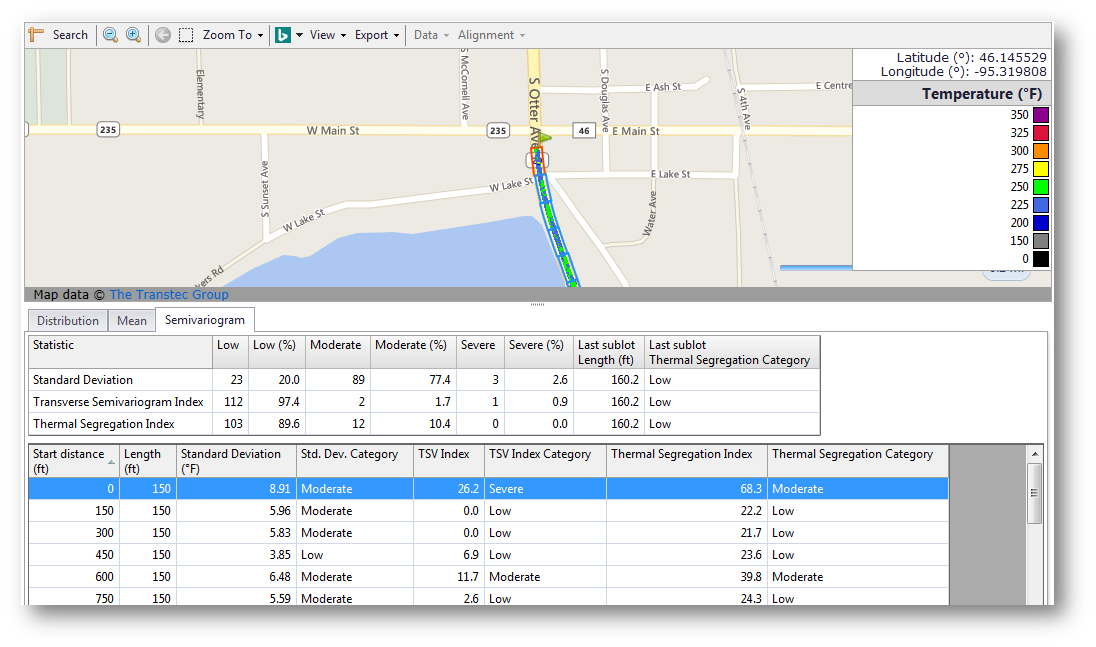
  • A new temperature segregation index (TSI) and new TSI analysis outputs.
  • Versatile PDF reports, including options to choose which items to report and the ability to add a logo and signature line.
  • Performance improvements to better handle huge project files.

View the 5.0 Release Notes to see all the new features and changes.

The new Temperature Segregation Index (TSI) is a composite index with conventional standard deviation and transverse semi-variogram.

The new Temperature Segregation Index (TSI) is a composite index with conventional standard deviation and transverse semi-variogram.

With greater control over construction data, users can perform more detailed analyses and create reports that can help agencies determine contractor pay factors. Construction teams implementing Veta 5 can expect to perform these complex tasks smoothly.

[button link=”www.intelligentconstruction.comveta/current-version/”]Download Veta 5 for Free[/button]

IC and PMTP systems gather a tremendous amount of complex geospatial data that poses challenges for data management, analysis, and reporting. These issues have become the main hurdles during implementation. To address the above issues, The Transtec Group, the Minnesota Department of Transportation, the Federal Highway Administration (FHWA), and the Transportation Pooled Fund Study, TPF-5(334) aided in the development of Veta.

Veta is required in FHWA and AASHTO PP80-17 and PP81-17 specifications and is increasingly adopted by state highway agencies.

Read more

Veta 4.3.28 Released

This version fixes an issue with the Transverse Semivariogram used in the thermal profiling analysis.

Download Veta 4.3

Analysis – Transverse Semivariogram

  • Change: The standard deviation uses a different algorithm and now matches the value in the distribution table.
  • Change: The default TSI specification has been changed. Moderate is now 30 and Severe is 70.
  • Fix: The wrong temperature data was used for each sublot.
Read more

FHWA, The Transtec Group Release Intelligent Compaction Measurement Values Tech Brief

The FHWA and Transtec released a technical brief to demystify Intelligent Compaction Measurement Values

Because Intelligent Compaction Measurement Values (ICMV) is a difficult subject to understand and there is a lack of systematic and comprehensive documents explaining ICMV, the Federal Highway Administration (FHWA) and pavement engineering firm The Transtec Group released a technical brief to demystify ICMV. The tech brief provides a comprehensive description on the mechanisms of ICMV and serves as a road map for using ICMV for real-time compaction monitoring, control, and acceptance. It covers how to measure and calculate ICMV, models for solving ICMV, and the various levels of ICMV.

[button link=”https://www.fhwa.dot.gov/construction/ictssc/pubs/hif17046.pdf” size=”small” target=”_blank”]Download the ICMV tech brief[/button]

ICMV is a generic term for advanced measurement systems instrumented on vibratory rollers as a key components of intelligent compaction (IC) systems. ICMV is based on the acceleration signals that represent the rebound force from the compacted materials to the roller drums. ICMVs are in different forms of metrics with various levels of correlation to compacted material’s mechanical and physical properties, such as stiffness, modulus, and density.

Without ICMV, it is difficult, if not completely impossible, to determine whether compaction has reached the required properties. In addition, ICMV can identify weak spots or difficult-to-compact locations even if there were sufficient roller passes for those areas. ICMV is the only technology that can provide measurements for as-built properties with 100 percent coverage of compacted areas. The tech brief provides important technical classification and level systems leading to true layer-specific modulus and density measurements of compacted materials.

ICMV helps contractors measure the levels of compaction during the compaction process to allow just-in-time adjustment of operation to optimize the compaction efforts, which leads to improved compaction quality control (QC).

ICMV provides owners and agencies with permanent records of as-built information that can be used for forensic studies and future rehabilitation decisions, which leads to improved quality acceptance and assurance (QA). High-level ICMV can also help with the future implementation of Building Information Modeling (BIM) for pavements.

Intelligent Compaction is an equipment-based technology to improve quality control of compaction.

Intelligent Compaction

IC is an equipment-based technology to improve quality control of compaction. IC vibratory rollers are equipped with a high precision global positioning system (GPS), infrared temperature sensors, an accelerometer-based measurement system, and an onboard color-coded display.  IC is used to improve compaction control for various pavement materials including granular and clayey soils, subbase materials, and asphalt materials. The accelerometer-based measurement system is a core IC technology that was invented in the early 80’s and is still evolving today.

Over the summer, the FHWA and Transtec released two other IC technical briefs:

  • Specification for Intelligent Compaction Technical Brief (FHWA-HIF-17-037) provides a review of national and state IC specifications and recommendations for future enhancements.
  • Color-Coded IC Maps Technical Brief (FHWA-HIF-17-036) outlines guidelines and recommendations for color-coded maps using IC and paver-mounted thermal profiler (PMTP) data.

Veta Software

IC and paver-mounted thermal profiler (PMTP) systems gather a tremendous amount of complex geospatial data that poses challenges for data management, analysis, and reporting. These issues have become the main hurdles during implementation. To address these issues, the Minnesota Department of Transportation, FHWA, and the Transportation Pooled Fund Study, TPF-5(334) have funded development of the Veta software tool for IC and PMTP data viewing and analysis.

Veta is a map-based software tool for viewing and analyzing geospatial data. Currently, Veta can import data from various IC machines and PMTP scanners to perform editing, filtering, spot test correlation, and statistical analysis as a post-processing tool.

One of the salient features of Veta is to viewing IC and PMTP data as color-coded maps on top of geographical road or aerial maps to facilitate quantitative interpretation. Key examples are for evaluating consistency of rolling patterns and for identifying cold blobs or streaks of asphalt temperature segregation. Veta allows users to select any specific passes to be viewed, including the last pass or final coverage.

Veta is required in FHWA and AASHTO PP80-17 specifications, and is increasingly adopted by state highway agencies.

The Transtec Group developed Veta with support from the FHWA. Veta is free to download. Currently, the Transportation Pooled Fund (TPF) study, “TPF-5(334) Enhancement to the Intelligent Construction Data Management System (Veta) and Implementation” is leading the effort for enhancing and maintaining Veta to facilitate the national IC/PMTP implementation.

Read more

Veta 4.3.27 Released

This version fixes a few problems. Most importantly, there was an issue where HAMM data was not always imported correctly. Existing HAMM projects will be reprocessed to correct this.

Download Veta 4.3

Import

  • Fix: HAMM data that was recorded as Vibratory but had no HMV value was marked as Vibratory instead of Static.

Filters

  • Fix: Adding more than one daily lot at a time could cause a crash.

Misc

  • Fix: Could not save extremely large projects.
Read more

Veta 4.3.23 Released

This version fixes an issue that caused data filters that used a range (minimum and maximum) to not have an effect. This will change any results that used such a filter. Final coverage will be automatically be reprocessed to correct this.

Download Veta 4.3

Final coverage will be reprocessed.

Filters

  • Fix: Selecting a range of values for an item in a data filter had no effect. For example:
    100 F < Temperature < 200 F

Analysis

  • Fix: Changes to the sublots could cause the software to crash when navigating the analysis.
Read more
Download Veta

Veta is a map-based tool for viewing and analyzing geospatial data. Download Veta for free.

Veta Intelligent Construction