What is Intelligent Compaction?
Intelligent Compaction (IC) refers to the compaction of fill or roadway materials, such as soils, aggregate bases, or asphalt pavement materials, using modern vibratory rollers equipped with an integrated measurement system, an onboard computer reporting system, Global Positioning System (GPS) based mapping, and optional feedback control. IC rollers facilitate real-time compaction monitoring and timely adjustments to the compaction process by integrating measurement, documentation, and control systems. IC rollers also maintain a continuous record of color-coded plots, allowing users to view the precise location of the roller, the number of roller passes, and material stiffness measurements across pavement, embankment, and other large earthwork applications where uniform support is critical.
Compaction is one of the most important processes in earthwork construction. It is necessary to achieve high quality and uniformity in pavement materials and in soils used for large-scale fill applications, which, in turn, help ensure long‑term performance. These materials often require specified compaction levels to provide adequate support, stability, and strength. Achieving adequate compaction uniformly is key, and IC aids this process. Current procedures using limited spot testing may result in inadequate and/or non‑uniform material densities, which can contribute to premature pavement distress or long‑term performance issues in fill and embankment materials. IC helps users overcome these issues by optimizing the compaction process.
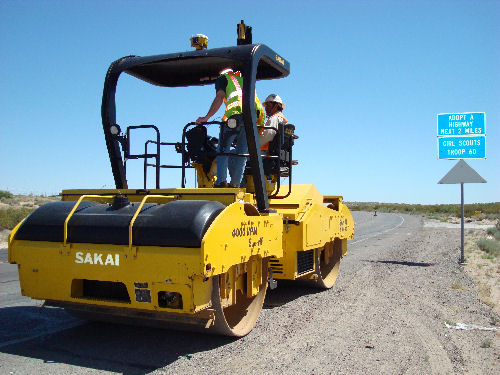
Watch this 2014 NOVA Award IC video for a quick overview on intelligent compaction.
Intelligent Compaction Measurement Value (ICMV)
Intelligent Compaction Measurement Value (ICMV) is a generic term, coined by the US Federal Highway Administration (FHWA), for a calculated value based on accelerometer measurements on IC vibratory roller drums. ICMV is a modern compaction quality control metrics and techniques that can cover 100 percent of the compacted area. Therefore, IC and ICMV can be used to improve quality monitoring and control, but also pushing the enhancements of roller technologies.
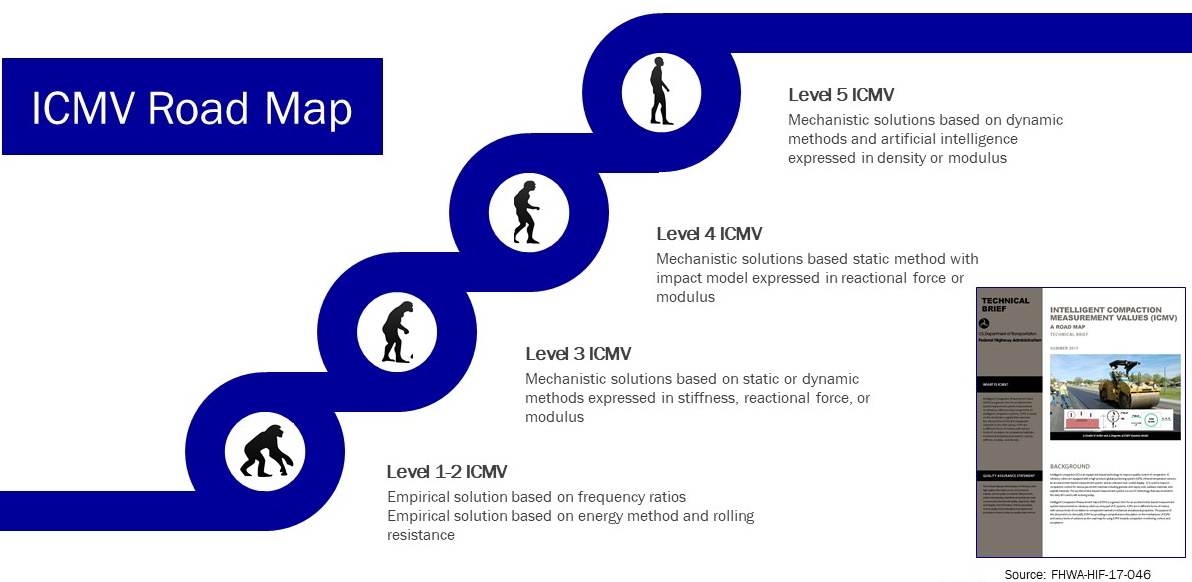
The following describe the “Levels of ICMV” for the systematic classification of ICMV. The classification is based on four criteria: (1) correlation with material’s mechanical (modulus) and physical properties (density), (2) validity during decoupling when a drum loses contact with compacted body, (3) capability to allow performance analysis of the compacted body, (4) applicability to obtain layer-specific mechanical and physical properties of compacted body, (5) capability to be enhanced by advanced technology such as AI. This lays out the road map for past, present, and future ICMV development.
- Level 1 ICMV – Empirical Solutions based on Frequency Responses: The Level 1 ICMVs are empirical solutions based on frequency responses represented by harmonic ratios. It is computed based on the Reactive Model for Vibratory Compaction or Reactive Model for Oscillation Frequency Reactive Model.
- Level 2 – Energy and Rolling Resistance Solutions: The Level 2 ICMVs are energy and rolling resistance solutions. It is computed based on Reactive Model with Rolling Resistance for static compaction.
- Level 3 – Simplified Static Mechanistic Solutions: The Level 3 ICMVs are simplified static mechanistic solutions. It is a static solution based on Discrete Vibration Model, Steel Drum Movement Model, or Continuum Static Model.
- Level 4 – Hybrid Model with Dynamic Mechanistic Solutions: The Level 4 ICMVs are dynamic mechanistic solutions with hybrid of various mechanistic ICMV models.
- Level 5 – Dynamic Mechanistic and Artificial Intelligence Solutions: The Level 5 ICMVs are a combination of dynamic mechanistic solutions and artificial intelligence solutions.

Notes:
1. Correlation: The threshold value for coefficient of correlation between ICMV and in-situ spot tests is generally accepted as R = 0.70 or R = 0.5.
2. Decouple: Produce valid solution of ICMV during double-jump or decouple when the roller drum and compacted material lose contact.
3. Layer Specific: Produce layer-specific ICMV values.
4. Advanced IC: The ICMV can be combined with advanced technologies such as Artificial Intelligence and auto-feedback controls.
4. X: No or Bad, O: Satisfactory, ?: Unproven; V: Yes or Good.
Learn More

How does intelligent compaction work?

What are the benefits of intelligent compaction?
